
Same-Day Service
original weird fiction by Celeste Mott

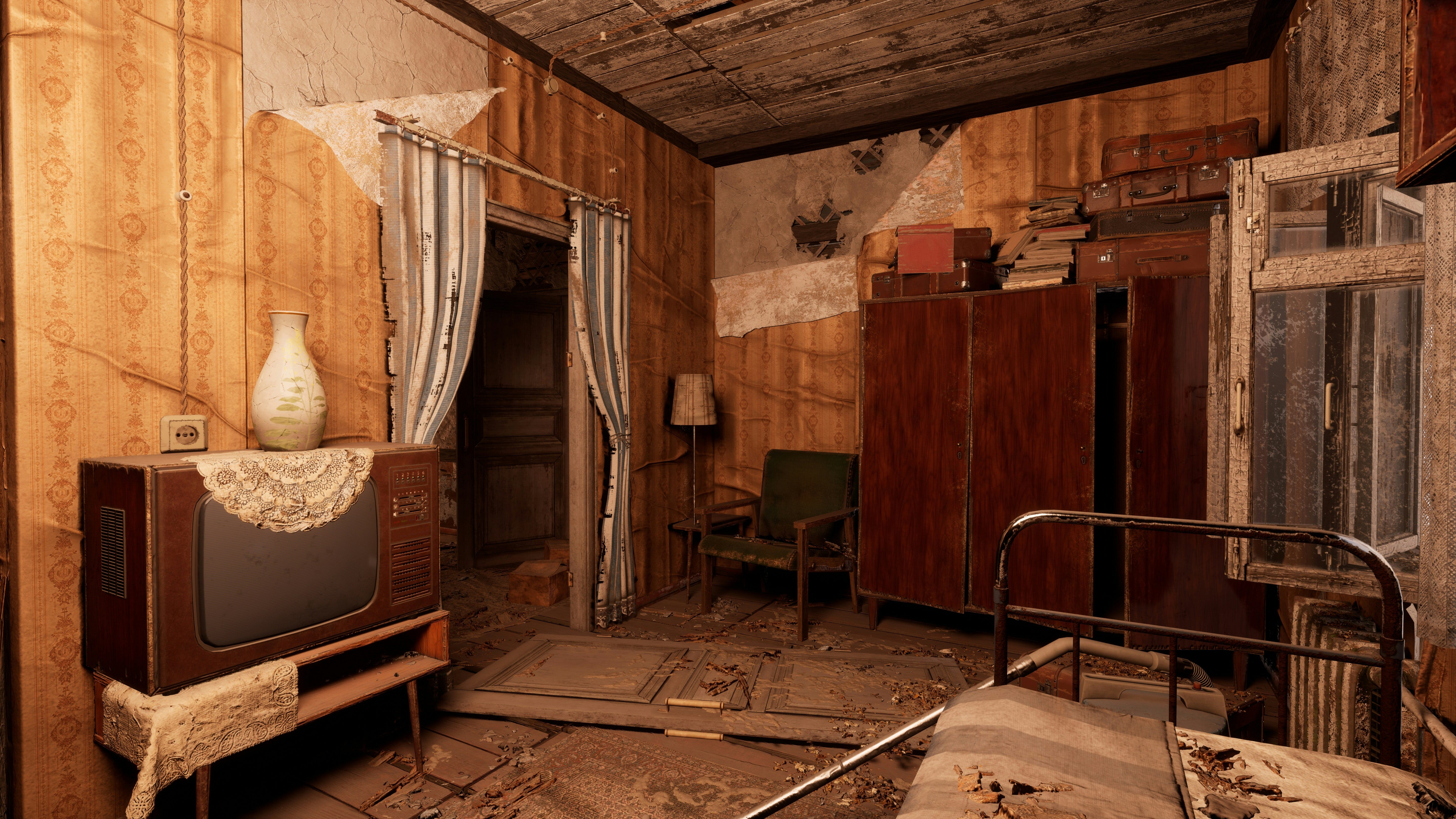
Sun-baked sill flies, cracks in the glass panes from peeled film. Once the heat seeps in there’s no stopping the swell, and after the swell comes the hollowing. Every plant in the yard turned ash-bone from atypical drought, but the crunch of the fried grass underfoot makes a pleasant soundtrack for pacing. Coralie paces now, back and forth across the corpse weeds, their uninvited bodies ground to dust beneath her house slippers. It’s too damn hot for slippers, but Coralie has one outfit and does not vary it: pink quilted dressing gown, jeweled pomegranate brooch, drug store sunglasses with rhinestone accents that make her look more confused Martian than retro starlet. She’s smoking a cigarette, a pastel Nat Sherman, only ever the green ones on Thursdays. The rest go in a drawer in the guest room to be assigned an appropriate day of the week whenever she gets around to it. The dresser is almost full now. Time’s a funny thing. Hard to make choices when the sun spits its ultraviolet bile so relentlessly.
Twisted around Coralie’s wrist, the spiral cord of the plastic wall phone threatens to cut off circulation to her bird-like claws. She’s got it pulled through the living room window, taut and threatening to snap as she crunches over the bodies of hairy beggar ticks and ragweed.
“Y’all sending someone out today, you said?” Pause to inhale the death draught, chemical companion—but its Thursday and green is the color of growth. Three cigarettes a week haven’t killed her yet. “Better be. It’s a kiln in there. I can feel my bones cooking.”
Outside the boundaries of her 2300 square foot lot, a different world recalibrates. Every set of eyes blinking sweat from stinging irises, every drive-by on the dilapidated street yields frame rate reset, a jerky reluctance to consent to reality. Reluctance, but not refusal. Maybe it’s the heat or the hurricanes, the cicada plague or the meat showers—things haven’t been normal exactly, not for a long time. But every time a plane falls out of the sky Coralie’s neighbors look the other way. There’s always a purpose and a pursuit to distract: Diet Coke and a looming deadline; screaming kids in a car seat; Hollywood smiles on haunted TVs. Reality can limp by on the wounded leg of bullshit for longer than you might imagine. Nevermind the wizards in their basements scrawling arcane sigils on the walls with ketchup packets. Out of sight, out of mind.
None of them notice Coralie even as they drive past her. Her tiny bungalow house with its rusted tin roof and warped weatherboard isn’t so much an eyesore as an eye-didn’t-saw. Green algae crusts the flaking paint. Cats claw and kudzu, engaged in a war of attrition, swallow the north-facing windows. The south-facing window is boarded up from the last big storm, wood-rot host to insects no one remembers the name of. The only window the pitiless sun can stare into is the one Coralie has pulled the telephone through, and now, as she’s about to give the HVAC specialist a piece of her mind, the cord snaps.
“Son of a—”
The cord uncoils from her wrist, electronic snake yielding its kill, and she shuffles back to the window, toe-bones flexed tip forward to push the phone back through the aperture. Even putting her hand inside the building raises her body temperature a few degrees. It’s dark inside, a womb for infernal things to replicate. She’d sleep on the porch if she could, sometimes does, but the palmetto bugs like to nest in her hair and she’s not quite ready for that level of intimacy.
Across the street, Mr. Abramson is taking out his trash cans. She notices him—she notices everything that happens on this horrible little stretch of suburban smear—but he doesn’t seem to see her. It’s been like this so long that Coralie can’t remember how it started, or if it started. Maybe it’s always been, the fact of her existence on this postage stamp of land a weird, half-forgotten footnote, a smudge on the newspaper of reality. If she was a different kind of person she might wonder what she’d done to deserve it. But it’s immaterial. She sees them, they don’t see her. Her house rots around her while they polish their doorknobs with spit and Windex. For the most part, she prefers this arrangement. Except when the AC goes out.
She stalks across the barren yard to the cracked porch steps, perches atop them like an off-brand Troll Doll. The HVAC men aren’t coming. They didn’t come yesterday, nor last week when she first called. She’s tried three different companies since then. There’s always a technical difficulty, a scheduling conflict.
They’d tried to arrive a few days ago. She’d watched the repair van halt at the end of her street, driver rigid as a mannequin behind the wheel. Other cars passed by him as he idled - three minutes, five, ten. Coralie couldn’t make out what he was doing. From that distance he was merely the suggestion of a man, a cardboard cut-out dispatched to restore the sacred biome of her rickety temple. But in her minds eye she had seen him squinting, peering down the street and counting the houses with their proudly displayed integers. He counted them over and over again, nothing amiss in the numerical organization of the carefully planned subdivision, no error in his capacity to process that data. And yet each time he failed to find her address, as if 214 Harlequin Street belonged to a separate language, a category out of synch with the order around it. Perhaps he had pulled out his phone, or (in desperation) a tattered street directory its plastic cover yellowed from age and sun-blight. But no compass would point him toward her. After fifteen agonizing minutes the van had reversed into a neighbor’s driveway and pulled out onto the street, heading the wrong way back to the comfort of the city that ran as it should, mechanical and awful, its billboards and neons promising clean, curated stasis.
Such events are a pattern. She’s observed it many times over the years: misdelivered mail, lost packages, delivery drivers circling like disoriented seagulls. She’s developed systems, little workarounds for survival. What else to do, when the world refuses to corroborate your existence?
Coralie stubs the green butt of the cigarette out on the side of the house. The yawning absence of her life has taught her many things: how to coax fat, turgid vegetables from the blighted soil; how to map the best path to the midnight deli that stocks little fancies to break up the monotony of her day. She’s even learned how to spin ink into items, an odd little trick passed down in The Great Book, ancestor to ancestor. It only works when she uses the blood of the pokeberries that grow in angry snarls over the collapsing back fence of the property. The book had not specified this, but half the pages had been gnawed out by tiny, unspeakable teeth, so a certain amount of intuition had been required.
The ink trick had come to her so gradually she can’t take pride in it—no eureka! moment, no purposeful experiment with dopamine payoff. Even the ancestors are a blurry stain on the fabric of her memory. Perhaps there had been an aunt once, or a brother. Such designations seem pointless. Perhaps they had shown her The Great Book. It doesn’t matter much. All Coralie knows is that one day small things started appearing: thimbles and matchbooks, plastic jacks in neon colors of the type you might find in the merry globe of a toy capsule vending machine, an ornamental comb shaped like a crane. It’s haphazard and unpredictable, but occasionally useful. Something is written in the pokeberry ink and the unearthly matrix of the house responds in kind—not a literal provision but a call and response, a word game played on a rewilded chessboard. It’s a means of survival – might be why she’s still here when everyone else is gone. But try as she might she can’t conjure a goddamn condenser coil.
Ruminating on this as the ants march purposefully over the matted tuft of her house slippers, Coralie hears something unusual. She has cataloged every sound in this suburban biome, knows each footfall and car exhaust in intimate auditory detail, but the noise that approaches is alien. A cascade of notes tumbles diabolically one over the other as if racing to suffocate a twisted melody, some warped facsimile of a nursery rhyme. It would be a stretch to call it music. And yet the haunt of it captures her. She looks up.
There is a van at the end of the street. It is covered in what looks to be tinfoil, a conical loudspeaker mounted to its roof and painted in a garish spiral of Sulphur yellow and flat black. Coralie watches as the aluminum cocoon rolls toward her with intent. Its windows are tinted so heavily she can’t make out the inside at all.
It pulls up onto the sidewalk directly across from her porch.
Rising from the stone steps, Coralie brings her hand to rest over the vial around her neck, the children’s bubble wand vessel in pink plastic star shape. It’s filled with Dawn and holy water, crushed poke berries and essence of Angel’s Trumpet. She clasps it as one might a rosary, brow furrowed, lips drawn in a tight line. In all her memory this has never happened. Visitors, unexpected ones especially, are simply not part of her lived experience.
The man who steps out of the vehicle looks regular. His meat is artfully arranged in the shape of a Normal Blue Collar Man. There are no flourishes, no bells and whistles. His embroidered polo shirt is distressingly clean. The only anomaly, perhaps, are his wraparound sunglasses, mirrored to reflect Coralie’s diminished, scraggly form. She sees herself echoed in those plastic eyes as he bounces toward her, an ambling yet peppy gait that reminds her of a trained dog in a Soviet circus, somehow downtrodden and enthusiastic all at once.
He stops in front of her. He smiles, but not with his teeth. She counts this as a blessing.
“Ms. Link?”
He has a clipboard suddenly. Did he have a clipboard before?
“Coralie Link, yes?”
“Yes.” Coralie’s grip on the plastic star tightens.
He smiles again, a perfect line cut across the light stubble of his face, lips so thin they disappear in on themselves. No teeth. Good. A relief.
“I’m here about air conditioner,” the Normal Blue Collar Man says.
Coralie looks from the man to his silvery work vehicle. The glare from the reflected sun makes her eyes water. She looks back at her own squinting eyes peering into the void of his glasses.
“Our call got disconnected…?” It’s a plea more than a question, a desperate attempt to anchor the exchange in the realm of the regular and routine.
“Our call got disconnected.” He echoes, still smiling. “Well, I’m here now. Shall we take a look?”
Coralie half expects him to stutter out of the visual field as she turns toward the door, as she leads him up onto the porch. But she can hear him behind her, the splintered boards creaking just as they ought to, and something about that comforts her. In all her years alone in the house the land has never failed to provide. She must trust that things will proceed as they always have. The fat spider in its lattice of cobwebs watches her close her claw-hand over the doorknob. It has always been so, it chitters. Coralie wonders if The Normal Blue Collar Man can hear it.
***
Inside the sill flies are turning to ash. It’s happening faster than it ought, but Coralie has come to expect these eccentricities. She brushes them into a chipped coffee cup as the Normal Blue Collar Man shimmies past her into the black mouth of the house.
“Dark in here,” the Normal Blue Collar Man does not remove his glasses. He artfully side steps a tiny battalion of ink cap mushrooms pushing through the gaps in the rotting floorboards.
The words do not seem to require a response, so Coralie says nothing. Instead she listens to the house as the Normal Blue Collar Man moves deeper inside. There is a susurration like battered moth-wings. He does look familiar. The familiarity is not reassuring. Has she seen him in The Great Book? Impossible to tell. All the pictures have rearranged themselves into tangles of inky static over time. Once, she learned every item in the world by pouring through its pages. Now, what pages remain intact are soaked through with the purple blood of the berries. Coralie watches the Normal Blue Collar Man pass under a banner of opossum bones braided on frayed ribbon. The house whispers to her in a minor key. Unseen, she side-steps to the rolltop desk and reaches for the book.
The Normal Blue Collar man has reached the air conditioner. It hangs half out of the rotted living room window, cracks in the plaster threatening to loose it from its moorings. He positions himself properly, leaning into the rattling plastic.
“Yeah, it’s broken alright,” he laughs, a short bark like a kicked dog. “It sure is broke down.”
The book is in Coralie’s left hand. She runs her right over her sweat-slick forehead, pushes the salt-stain into her tangled hair.
“Can you fix it?”
He ignores her, sucking his bottom lip into his mouth as he hums an approximation of the van’s uncanny theme.
There’s a gnawing in Coralie’s gut, how she imagines it might feel to have your insides cauterized. The dust motes swirl in alarming patterns, catching the light just so in the language of dying stars. She sets The Great Book down quietly on the desk, splits it open with surgical precision. There’s no point looking down, but she does anyway. The entrails of existence are obscure as always.
“How long you been here? On this land?” He remains fixated on the cheap plastic window unit. He has removed its yellowed face, its dust-dense filter.
Coralie frowns, snail slime of sweat dripping from eyebrow to chapped cupid’s bow.
“I think I was born here?”
“You think?”
“We don’t keep records. No point.”
He nods curtly, makes a note on the clipboard with his Very Normal pen.
Under Coralie’s feet, under the rot of the subfloor, the void mice skitter out a warning. Under the crawlspace of the house the maggots writhing in their cathedral of decay, cat-guts and corpse-bloat, sing all things end. She knows already, but nobody prepared her for this. What can she conjure? Weapon? Bribe? One hand rests on the open pages of the book. The other reaches for the screw top of the plastic star.
“When’s the last time you got this thing serviced?”
Coralie thinks. From somewhere inside the house an insectoid screaming begins, cicada howl in E minor. This is normal, and the sound of it comforts her. After all, the ink trick is unreliable. Mercury dimes, bent pennies, a stale donut. What good would it do? She releases her hold on the talismanic star.
“I guess I don’t know that either,” she shrugs, hunched shoulders bunching up the material of her house coat. “The others were here once—family, you could say. One of them was handy with a screwdriver. Don’t know when he left.”
The man makes another note on the paper, nods.
“We have that data somewhere. Don’t you worry your pretty little head about it,” he turns to look at her, finally. It is too dark to see her reflection in his shades. “You did a good job, ma’am. But you’ve been here too long.”
Coralie can’t remember the last time she cried, or if she ever has. But her cheeks are wet, and the cicadas are singing, and in their song she hears the voices of all the creatures who have taken shelter in these walls, the meat robots and the seers, the mole crickets and the hermit crabs. She remembers, for a second, a softness before the world was made—something you might have called ‘mother.’ Even the black mold, stachybotrys with its wicked, hungry eyes, is present in that song. For a moment it seems as if the whole ecosystem of the lost lot has come untethered from itself.
“You sure you want to fix it?”
It’s not really a question, Coralie realizes—just a formality. They are merely following a script. She thinks of the pastel Nat Shermans in the old dresser, how they will never be assigned a day of the week. But the cicadas are singing, and there is an answer in that song. Coralie opens her mouth to receive it.
The Normal Blue Collar Man’s face splits open. Every one of his teeth is perfectly straight and pure.
***
Outside, the sun begins its descent. The man unspools a ream of blank barricade tape and zigzags it artfully across the threshold, fixing it in place. He hums, the nails in his mouth pointing inward, vibrating against his teeth. The hammer, slung around his neck on a neon lanyard, jostles against the pink plastic star. It is a pleasing collection of noises—not music, but not unlike it.
Across the street, Mr. Abramson is returning from walking his dachshund, Colin. Colin pulls on his leash, tugs toward the lost lot. He and Mr. Abramson stop beside the strange, tinfoil-covered vehicle. Colin does not bark, merely stares up at the dilapidated house, at the Normal Blue Collar Man going about his work. Mr. Abramson squints into the setting sun. An indescribable feeling washes over him. He cannot name it, but he will tell his wife, later, that it feels like a fungal bloom in the lungs, a great spidering of bone-white vines erupting through his capillaries, like acid rain scalding the skin and tendons from his reluctant skeleton. He will call it an unbirthing, as his tears fall into his chicken pot pie. His wife, with a blank expression, will respond “That’s nice, dear.”
The Normal Blue Collar Man removes a piece of paper from his clipboard and affixes it to the battered siding of the house. One by one, he takes the nails from his mouth and hammers them, spit-end first, into the wood. He steps back to survey his handiwork, tilts his head to one side. As if gesturing to something unseen, he takes his ball-point pen and fumbles for a moment with the plastic star, dipping the tip of the rollerball into Coralie’s concoction. He leans into the paper, pulls the dripping pen up and makes a mark.
“What’re you doing there?” Mr. Abramson, despite himself, cannot contain his curiosity. He doesn’t move from the sidewalk but leans forward, an echo of the Normal Blue Collar Man’s own posture. “Something wrong?”
The Normal Blue Collar Man turns, shaking his head just once. His split-sausage smile, toothless and demure, looks exactly right on his generic face. “I need a beer,” he responds.
Mr. Abramson is scanning the house now, the cracked siding, the tangle of cats claw and kudzu. He is taking in the skittering bugs and lizards, the mold casting its shadow over the peeling paint. He notices an air conditioning unit hung backwards out of a window, plastic vents pointing toward the street. He notices, also, that it has been painted a garish shade of yellow, its knobs and vents covered with black electrical tape.
The Man walks down the pathway toward his vehicle. He does not look at Mr. Abramson—or perhaps he does. It is impossible to know.
“Hey,” Mr. Abramson is mounting a defense, for what he does not know, only that every cell in his body is screaming in protest, suddenly and very acutely, that something is wrong. “I don’t think you—you shouldn’t install those like that. They don’t work right. What’s it gonna do, cool down the neighborhood?” He laughs at his own toothless joke, a dead laugh in a metal can.
The Normal Blue Collar Man stops, fingers already hooked under the door handle of his work van. He turns toward Mr. Abramson and Colin, his mirrored lenses reflecting the blood shot eye of the sun. Mr. Abramson is reminded, in a rapid glitch of memory, of a point-and-click video game he’d played as a child, an 8-bit animated skull with glowing eyes, its jaw unhinging in a horrible digitized cackle.
“I need a beer,” the Normal Blue Collar Man says again.
Mr. Abramson opens his mouth but can call no language forth. The Man gets into his vehicle, closes the door behind him. A static shuffle precipitates the return of the sound, winding back on itself and then regurgitating through the roof-mounted speaker. The van pulls out onto the street and follows the road away. Mr. Abramson watches it until it becomes a speck on the horizon, rooted in place, transfixed. He does not notice that the leash has gone limp, that it has fallen from his hands.
When the van disappears from the horizon, Mr. Abramson returns to the present moment. Colin is gone. The sound should be gone, too—that ricket rumble, that snarl of melody, that unearthly sound approximating repetitious childhood rhymes. But it is playing, still. He looks back at the house, at the violent colored air conditioner. There is a scent in the air—damp and decay, something wet and rotting, something that leaves a stain. But it is cooler, now. It is not unpleasant, despite the aggressive hammering against the walls of his chest.
The window next to the air conditioner is open. Mr. Abramson sees a telephone cord snaking through it, and through that tiny dark aperture, he has the odd but undeniable sense that something is watching him.
“Colin?” He says, already knowing the answer. There is no leash in his hands anymore. Maybe there was never a leash. And who is Colin?
Other neighbors are gathering now, emerging from the spotless facades of their houses to inch across the asphalt, slug-like, probing with tired eyes toward the inevitability. One woman fusses at the toddler hoisted against her hip. She adjusts the weight of the infant. And then there is no infant to adjust.
The telephone inside the house begins to ring.
“Is someone going to get that?” Mr. Abramson asks.
It rings for a very long time.